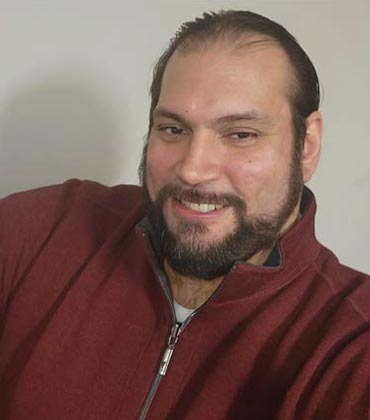
William Ortiz
Construction Safety StewardWilliam Ortiz is the Director of Human Resources and Risk Management at Siteworks LLC, a site development contractor based in Charlotte, North Carolina. With over two decades of professional experience, Will oversees human resources, employee safety, risk management and claims investigations. His approach emphasizes practical solutions, accountability and continuous improvement, working closely with field operations and company leadership to strengthen safety practices and address the challenges facing the construction industry. He believes effective risk management begins with understanding the realities of the field and recognizing opportunities to improve before problems occur.
There is a lot going on beneath our feet and most people never give it a second thought until something stops working. Water, electricity, natural gas, internet. We depend on these services every day, but the infrastructure supporting them isn't always as straightforward as we would like to believe.
In construction, we're increasingly working around what I can only describe as a spaghetti network of underground utilities. Some have been there for decades. Others have been repaired, relocated or disturbed by previous construction. And sometimes, what we're told is underground and what we actually find are two very different things.
That presents a challenge. We have infrastructure to build, but we also have a responsibility to protect what's already there. Over the years, I've learned that doing both takes more than simply calling 811.
Sometimes the Problem Starts Before the Digging
Part of my role in risk management at Siteworks involves investigating utility strikes, including claims where we believe our crews weren't responsible. We've encountered utilities at unexpected depths, facilities that were previously disturbed, incorrect markings and lines that weren't marked at all.
But the more we investigated these incidents, the more I realized that some of our challenges weren't necessarily happening in the field. They were happening before our crews ever arrived.
Take something as simple as requesting a locate.
If you're working along a stretch of road from Point A to Point C, it's reasonable to think everything between those points is covered. But 811 requirements don't necessarily work that way. Depending on the distance, parcels and scope of work, you may need multiple tickets. And there's a difference between having a locate ticket and having the
correct locate ticket.
We owe our employees the training, information and resources to work safely. In return, we expect them to use those resources and follow the procedures we've put in place.
As the technical details became more important in our investigations, I started looking harder at our own processes. Were we giving our crews everything they needed? Were we asking the right questions early enough? And where we putting too much responsibility on people already managing a dozen other things?
We needed to change our approach.
Getting Ahead of the Problem
In June 2025, we created a Utility Coordination Manager position.
I wanted someone who understood construction and project management but could dedicate their attention to utility coordination, changing 811 requirements and making sure locate requests were submitted correctly. More importantly, I wanted that person involved from the beginning.
Utility coordination now starts during preconstruction, alongside estimating and project management. We work to understand what infrastructure is already there, request planning and design locates and coordinate the excavation locates needed before work begins.
Does that mean we know exactly what's underground? Of course not.
Records can be wrong. Markings can be wrong. A utility might be at one depth in one location and a completely different depth a few feet away. That's why planning has to be followed by verification in the field. Our crews are expected to review markings, identify conflicts, use appropriate methods to expose utilities and stop when something doesn't make sense.
I'd much rather have someone stop a job to ask a question than have to investigate why they didn't.
Expectations Have to Mean Something
We spend a lot of time reinforcing these expectations through toolbox talks, safety stand-downs, foreman discussions and regular communication. We also recognize good decisions through our Safety Token Program.
I believe positive reinforcement matters. People should know when they're doing things right. But accountability matters just as much. There's a big difference between encountering something nobody could reasonably have anticipated and knowingly ignoring a procedure you've been trained to follow.
We owe our employees the training, information and resources to work safely. In return, we expect them to use those resources and follow the procedures we've put in place. We've seen progress. Siteworks had more than 40 utility strikes in 2024, 25 in 2025 and fewer than 10 through October 13, 2026.
I'm not suggesting one position or one policy made that happen. It has taken a team effort and we still have work to do. But those numbers tell me we're moving in the right direction.
It's About More Than the Line in the Ground
When a utility gets damaged, the impact doesn't stop at the excavation. Someone may lose water to their home. A business may lose power. An entire area could lose internet service. And then there are the people standing right there when it happens.
Hitting an energized electrical line or damaging a gas line can cost someone their life. That's a reality our crews work around every day and one we cannot afford to become comfortable with. We also owe something to the municipalities and communities where we work. They've invested in the infrastructure we're working around and our job is to improve it without unnecessarily disrupting what people already depend on.
I don't believe any contractor will ever eliminate every underground surprise. But we can get better at preparing for them, communicating what we know and recognizing when something needs to change. And that's probably the biggest lesson I've taken from all of this. Utility damage prevention doesn't begin with the equipment operator. It begins with the decisions we make long before that operator starts digging.
Because at the end of the day, it's not just about what we build. It's about making sure our people go home safely and the communities we serve can continue relying on what's already there.