

Thank you for Subscribing to Electrical Business Review Weekly Brief


 Stephanie Trent, CEO
Rather than simply offering enclosures around standard dimensions, Modutek International develops each solution around the customer’s site, footprint and operational requirements. Customization also extends beyond technical specifications. Many of its enclosures serve architecturally attractive buildings, with designs tailored to complement their surroundings.
Its in-house mechanical and electrical engineering teams become involved at the specification stage, helping engineering firms define requirements for a particular site before carrying the solution through design, fabrication and testing. This end-to-end approach also allows customers to consolidate major components under a single purchase order, reducing vendors and procurement handoffs.
Its engineering team also provides PE-stamped drawings, wind-loading analysis and earthquake-zone ratings where required, giving customers engineering support from specification through production. Beyond engineering, the company manufactures, tests and integrates complete power packages, including UL-listed enclosures, circuit breaker cabinets, load banks, UL142 fuel tanks and UL2085 fuel tanks.
Engineering beyond the Standard
Modutek International handles fabrication from raw coil steel through finished enclosure, using lasers, press brakes, punches, turrets and plasma tables. Because it stamps, bends and coats metal in-house, the company is not constrained by standard vendor dimensions and can build enclosures to virtually any required size.
-
We’re expecting significant growth over the next few years, and our expansion projects are designed to support that demand.
Many of its modular packages share common components, including wall panels, roof panels and subpanel sections, enabling efficient production while maintaining design flexibility. Modutek International demonstrated that flexibility on a project located in St. Louis, where the customer needed substantial fuel capacity within a highly constrained footprint. Rather than forcing the site to accommodate a standard configuration, it engineered a taller-than-standard UL2085 tank and secured UL approval for the design.
Its 78-inch-tall sub-base tanks can also accommodate projects requiring 20,000 gallons of fuel within footprints as constrained as 36 feet in length.
Infrastructure Built to Size
Modutek International’s integrated approach is supported by a 140,000-square-foot high-bay facility with multiple heavy-lift overhead cranes. The capacity allows it to fabricate and move oversized enclosures and modular power packages, including multi-generator and switchgear configurations, that require substantial scale.
The rail-served facility supports the movement of large equipment, with packages manufactured in sections for transportation and final assembly at the customer’s site. For example, large power packages comprising four generators and a switchgear enclosure are manufactured in sections and transported to the customer’s site for final assembly.
A Legacy of Engineering Expertise
Modutek International’s roots stretch back to 1986, bringing decades of engineering and manufacturing experience reflected in the relationships built through years of serving demanding projects.
Building on that foundation, Modutek International is undertaking multiple facility expansions to accommodate projects already booked for the coming years, particularly as demand from the data center market increases.
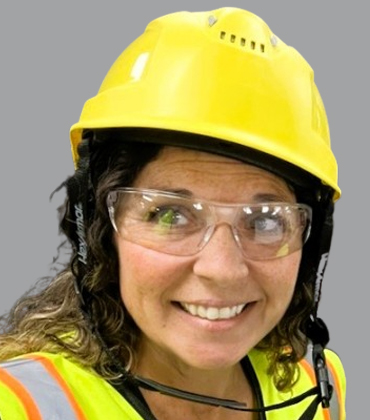
“We’re expecting significant growth over the next few years, and our expansion projects are designed to support that demand,” says Stephanie Trent, CEO.
As power infrastructure projects become more complex, Modutek International is expanding its capacity without changing its core approach; helping customers define site-specific requirements, engineer the solution and carry it through integrated manufacturing and testing.
Specification Discipline for Custom Power Enclosures
A power enclosure can satisfy equipment dimensions on paper and still create costly trouble at the site. Rooflines may conflict with surrounding architecture, while sound limits can tighten after layout approval. Access paths may also shrink once civil work advances, and generator packages carry structural and electrical dependencies that leave little room for late correction. Procurement teams need more than a fabricator that can build from a finished drawing. They need a manufacturer able to engage while the specification is still being shaped.
Early engineering depth is the clearest dividing line. Mechanical loads and electrical interfaces must be reconciled with the available footprint before steel is cut. Wind ratings or seismic requirements may demand stamped drawings and site-specific analysis. Existing facilities create another layer of constraint because equipment often has to fit around walls and service clearances while meeting fixed fuel-capacity requirements. A manufacturer with in-house mechanical and electrical engineers can test those conditions against the proposed package instead of passing unresolved questions among outside firms.
Dimensional flexibility matters just as much. Standard modules may lower quoting effort, yet they can force the buyer to redesign the site around the enclosure. That tradeoff becomes unacceptable when a project needs greater fuel volume within a restricted footprint or when several generator sections must connect to a switchgear room. Buyers should examine how much fabrication is controlled internally, including metal forming and coating. Direct control over these processes gives the manufacturer more freedom to alter height or length while keeping mating sections aligned.
“Modutek International brings enclosure fabrication, fuel systems, electrical assemblies and package testing under one purchase order.”
Package responsibility presents another pressure point, though it should not be reduced to convenience. Multiple purchase orders create interface risk between tanks and enclosures or between load banks and breaker cabinets. Testing responsibility may also become fragmented. A single-source package can simplify accountability when one manufacturer designs the enclosure and integrates the major equipment. Its responsibility should extend through assembled-system verification. That model is most credible when backed by lifting capacity and indoor handling space, as well as transport access suited to large sectional builds.
Appearance also deserves attention on projects tied to hospitals, data centers or prominent commercial sites. An enclosure may need parapet walls, gutters, coordinated finishes or a roof profile that fits the facility rather than resembling a temporary container. Acoustic treatment and environmental protection remain technical requirements, but exterior form can influence permitting and owner acceptance. The strongest suppliers treat those constraints as part of the design brief rather than cosmetic changes introduced after fabrication.
Modutek International fits this buying logic through an integrated engineering and manufacturing model. Its portfolio includes weather-protective generator enclosures, electrical room enclosures, UL-listed fuel tanks, load banks and circuit breaker assemblies. Its team supports early specification work, develops custom dimensions and produces PE-stamped drawings when required.
The company fabricates metal components in-house and handles large sectional packages through a rail-served heavy-lift facility. It brings enclosure fabrication, fuel systems, electrical assemblies and package testing under one purchase order. For projects constrained by footprint, site architecture or package interfaces, that breadth warrants serious consideration.
...Read more
